Have you ever wondered how Google auto-completes your search request? It is through data appending and enrichment. How? Data Enrichment works with raw data. The raw data...

Key Takeaways
You sent an important email three days ago. You double-checked the address, wrote a clear subject line, and kept the message short and to the point. But you haven’t heard back, and now you’re wondering: should I follow up? When? What should I say without making it awkward?
Follow-up emails are part of professional communication. People miss messages. Inboxes get crowded. Priorities change. Silence usually isn’t someone ignoring you on purpose. It’s more often an email that got buried, filtered, or arrived during a busy period when they forgot to respond.
Knowing how to send a follow-up email after no response requires balancing persistence with professionalism. This guide explains when to send follow-ups, what to include, and when to stop.
Before you assume someone is ignoring you, consider the many legitimate reasons emails go unanswered:
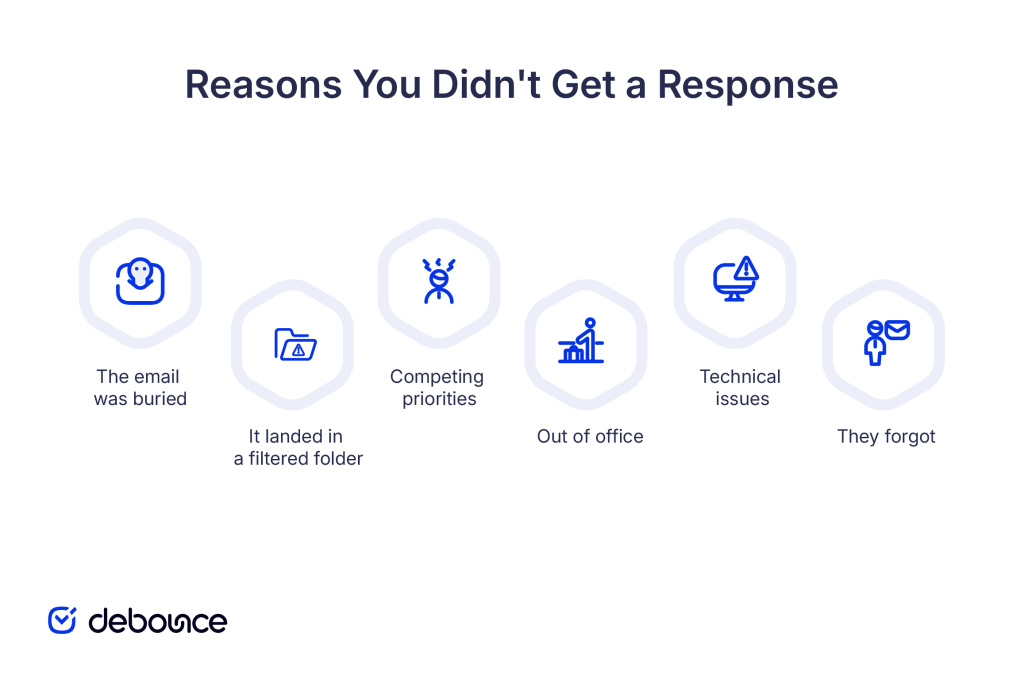
Silence rarely equals rejection. Assume positive intent and organizational issues rather than interpreting no response as personal dismissal.
Timing your follow-up appropriately shows respect while keeping your request visible. General timing guidelines include:
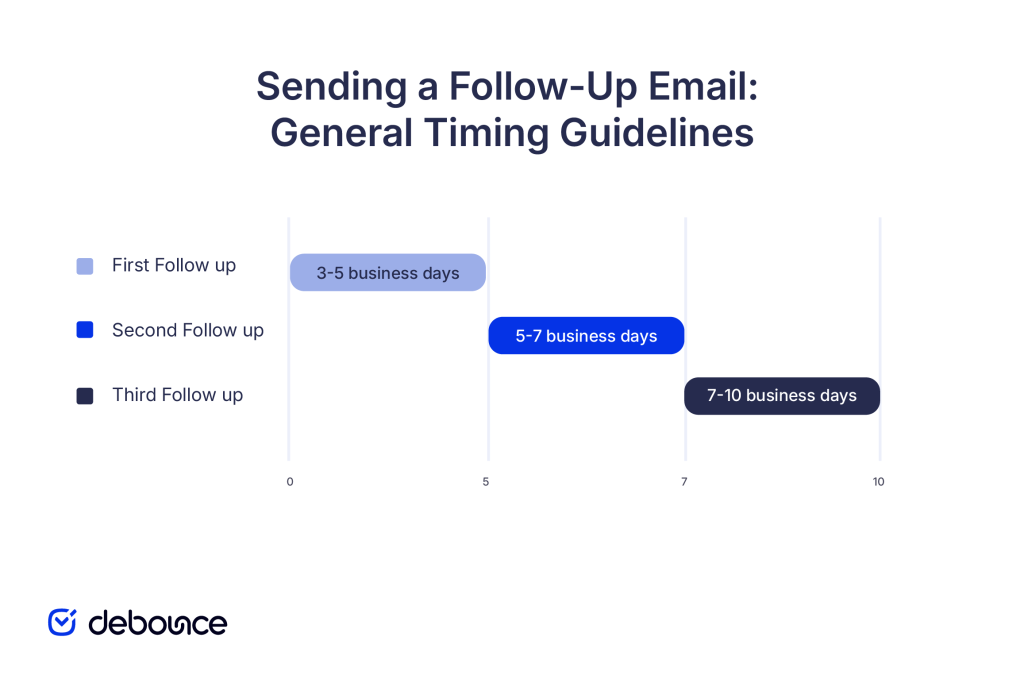
While general timing guidelines work in most cases, the appropriate follow-up window can vary depending on the situation, relationship, and urgency:
Most professional contexts support one initial email plus 2-3 follow-ups before you should stop. After three or four total contact attempts with no response, continuing crosses into spam territory.
When fewer follow-ups make sense:
When to stop immediately: If the recipient asks you to stop contacting them or indicates they’re not interested, stop immediately. Continuing after a clear “no” is harassment, not persistence.
A strong follow-up email respects the recipient’s time while making it easy to understand what you need and how to respond. The elements below help keep your message clear and relevant without sounding pushy.
Subject line strategy: Reply to the original thread to keep context visible. If starting fresh, reference your previous email: “Following up: [Original Topic].”
Opening: Acknowledge the situation without guilt. For example, you can say:
Do not use the following:
Add value: Don’t just repeat your request. Include:
Restate clearly: Distill your request into 1-2 sentences: “To recap: I’m hoping to schedule a 15-minute call to discuss how [solution] could help with [challenge].”
Make responding easy:
Close with a clear next step, like:
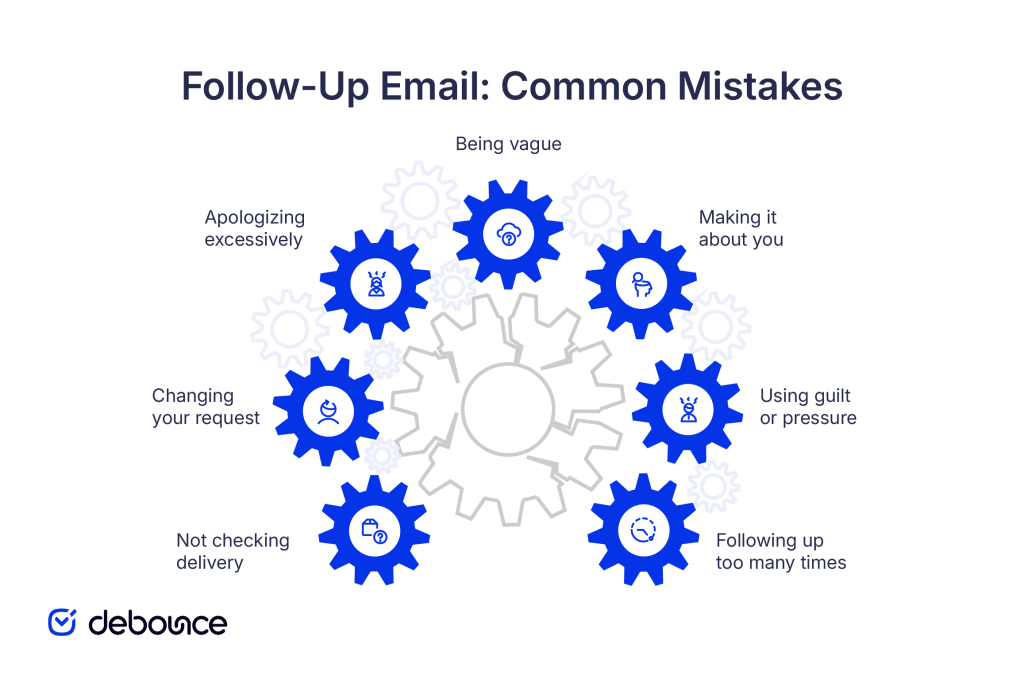
Even well-intentioned follow-ups can backfire if they create friction or frustration for the recipient. The issues below are common reasons follow-up emails fail to get a response or damage professional credibility:
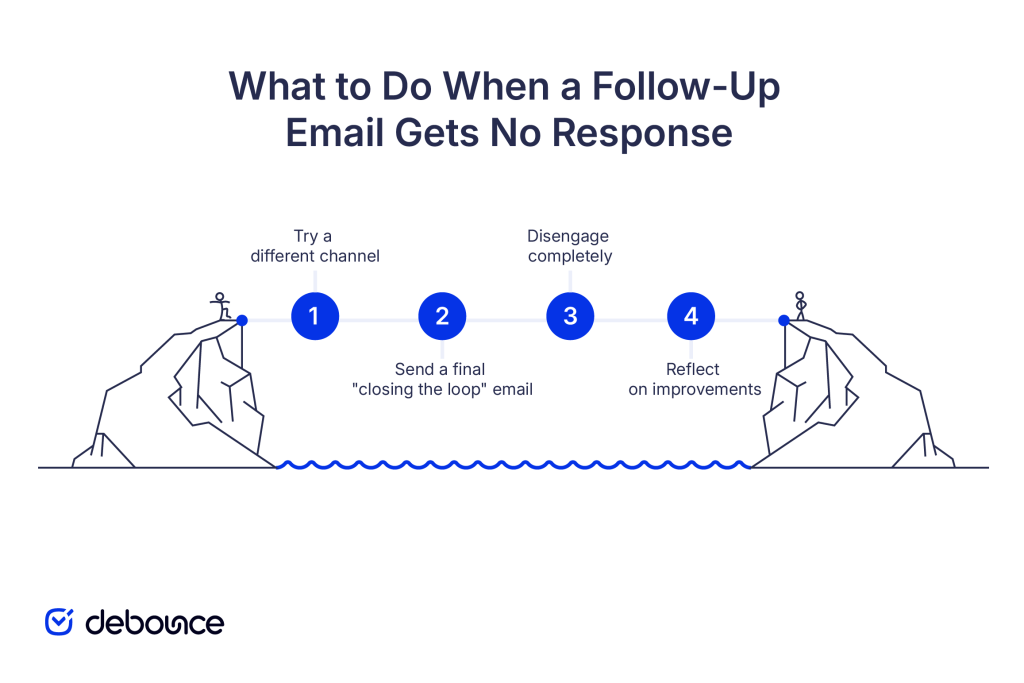
If multiple follow-ups go unanswered, the goal shifts from persistence to professionalism. The steps below help you close the loop respectfully, protect your reputation, and decide when it’s time to move on:
Follow-up emails after no response are normal and necessary. People are busy, emails get buried, and reminders help important messages stay visible. The key is balancing persistence with professionalism: follow up enough to stay visible without crossing into annoying territory.
Send your first follow-up 3-5 business days after your initial email, keep it brief and valuable, and limit yourself to 2-3 total attempts before moving on. When follow-ups get no response, accept that silence is an answer, close the loop professionally, and redirect your energy toward contacts who are ready to engage.
If you have an email waiting for a response and it’s been 3-5 business days, draft a brief follow-up that adds value and makes responding easy. If you’ve already followed up twice, send a graceful final message or move on.
Before sending important emails, verify that addresses are valid and deliverable. Email verification ensures your messages reach inboxes rather than bouncing, so when you don’t get a response, you know it’s a decision rather than a technical failure. Use DeBounce to validate addresses and maintain clean contact lists that support better deliverability.
Is it unprofessional to follow up more than once on an email?
No, following up 2-3 times is professional and expected; it becomes unprofessional only when you exceed 3-4 total attempts, use guilt-based language, or continue after someone asks you to stop.
Should I reply to my original email or start a new thread?
Reply to the original email thread to maintain context and make it easier for the recipient to find your initial message; starting a new thread forces them to search for background information.
Find quick answers to your questions about our pricing and plans.

Have you ever wondered how Google auto-completes your search request? It is through data appending and enrichment. How? Data Enrichment works with raw data. The raw data...
If you’re seeing far too many bounces for outbound emails, you may first blame your email copy, the whole target list of emails, or the...


DeBounce has recently introduced an advanced catch-all email validator capable of validating catch-all addresses across all email service providers. While it previously supported validation for...

Did you know more than 4.26 billion people use email worldwide? From a business perspective, email provides a direct, more intimate channel to connect with...
It has been several years since we are performing email validations in bulk, single, and API methods. Most of the customers ask us questions about...
Are your emails constantly landing in spam folders or being rejected? Your domain's multiple SPF records might be the cause of the issue. Unfortunately, despite...