There are certain best practices that every professional involved in email marketing knows. Things that most comprehensive guides detail, such as using email templates, setting...

Key Takeaways
Your last email campaign went out to 10,000 subscribers. You open the analytics and see a 22% open rate. Is that good? Should you be happy with it, or is it a sign your subject lines need some work?
Email open rates are still one of the most talked-about metrics in email marketing, even after privacy changes like Apple’s Mail Privacy Protection made them less precise than they used to be. They don’t tell the full story of whether a campaign succeeded. But they do offer useful signals about whether your emails are reaching inboxes, your subject lines are compelling, and your audience is engaged enough to click.
The tricky part is that there’s no single answer to “what’s a good open rate.” It depends on your industry, who you’re emailing, how often you send, and what you’re comparing yourself against. A 15% open rate might be impressive for a retail brand with a huge, mostly cold list. That same number could raise concerns for a small B2B newsletter with a highly engaged audience.
This guide explains what email open rates actually measure, shares industry-specific benchmarks so you have real context, breaks down the factors that influence open rates, and shows you how to calculate and improve your numbers based on your own situation.
A “good” email open rate is one that indicates your emails are reaching inboxes, your subject lines resonate with recipients, and your audience remains interested in your content. But the specific percentage that qualifies as “good” varies based on multiple factors.
General benchmarks for 2024-2025 include:
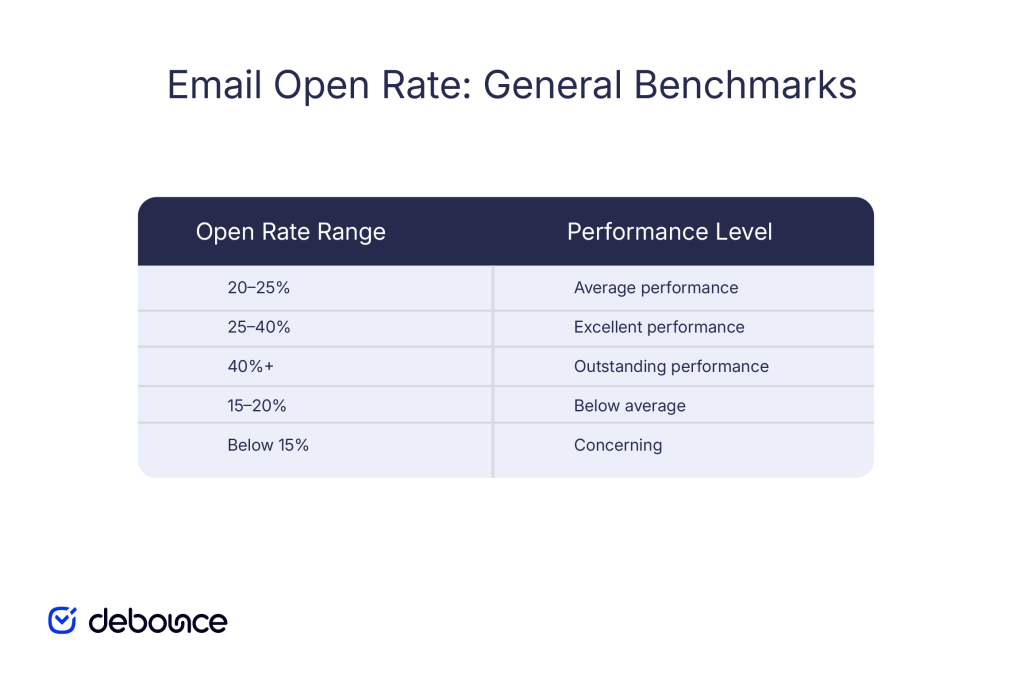
Why “good” isn’t universal:
Tools like DeBounce help maintain list quality by identifying invalid, risky, and inactive addresses before you send, which supports better open rates by ensuring emails reach real, engaged recipients rather than bouncing or landing in spam folders.
Email open rates vary widely by industry because audience expectations, urgency, and trust differ across sectors. Service-oriented and community-driven industries tend to see higher engagement, while commercial and high-volume sectors face more competition in the inbox.
Typical benchmarks for the following industries often fall within these ranges:
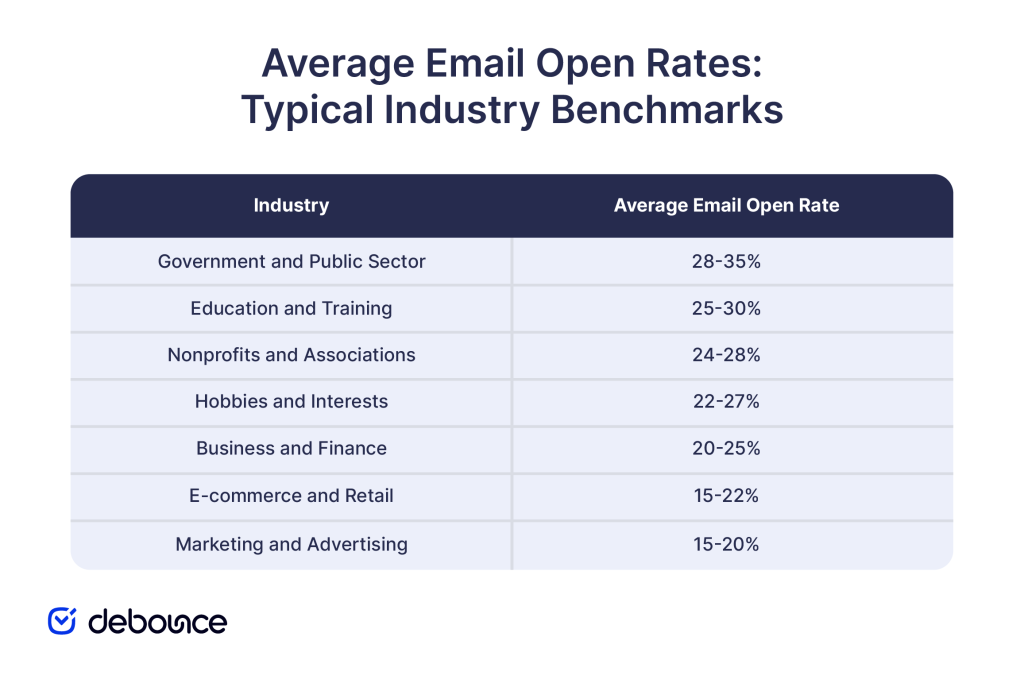
Government agencies, municipalities, and public sector organizations typically see high open rates because their emails contain information citizens need: service updates, policy changes, public notices, and community announcements.
Educational institutions, online course providers, and training organizations benefit from engaged audiences actively seeking information about programs, schedules, and learning resources.
Nonprofit organizations and professional associations often maintain engaged supporter bases that open emails to stay connected with causes, membership benefits, and community updates.
Content focused on specific hobbies, such as photography, writing, crafts, or gaming, performs well because subscribers actively choose to receive updates about topics they’re passionate about.
B2B companies, financial services, and professional service providers see moderate open rates reflecting audiences balancing multiple email sources and work priorities.
Online retailers and physical stores typically see lower open rates due to high email volume, seasonal variation, and audiences receiving emails from many competing brands.
Marketing agencies and advertising platforms face lower opens because recipients often receive high volumes of similar content from multiple sources.
Multiple variables influence whether recipients open your emails, ranging from technical deliverability to human psychology.
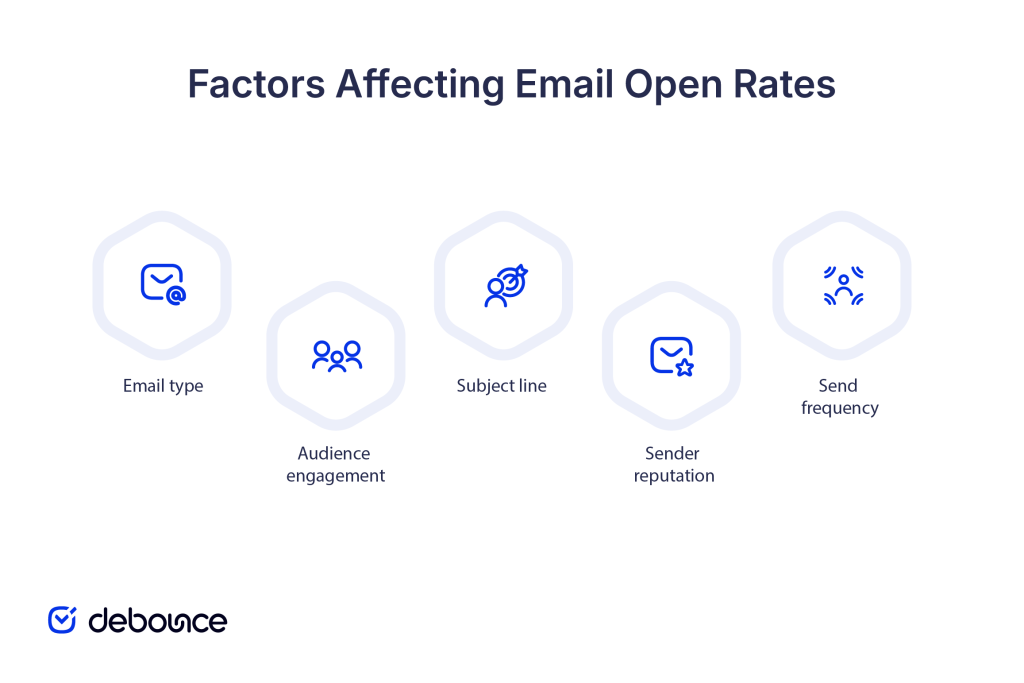
Transactional emails (order confirmations, shipping updates, password resets) routinely see up to 80% open rates because recipients expect and need them. Marketing emails (newsletters, promotions, announcements) typically open at around 20% because they’re optional reading that competes with other priorities.
Welcome emails sent immediately after signup often see 50-60% opens because they arrive when interest is highest. Re-engagement campaigns targeting inactive subscribers typically see much lower opens because the audience has already demonstrated disinterest.
Engaged subscribers who recently opted in, regularly open emails, and interact with content will continue opening at higher rates. Inactive subscribers who haven’t opened in months or years rarely start opening again without specific re-engagement efforts.
List quality directly impacts opens. Lists built through genuine opt-ins perform better than purchased, rented, or scraped lists. Invalid addresses, spam traps, and fake signups on your list drive overall open rates down because they count as delivered emails that will never be opened.
Your subject line is the single biggest factor in whether someone opens your email. Subject lines that are the following perform better than generic, vague, or misleading subject lines that don’t give recipients a reason to open:
Strong email sender reputation means your emails reach primary inboxes where recipients actually see them. Poor sender reputation causes emails to land in spam folders, promotions tabs, or get blocked entirely, all of which dramatically lower open rates.
Factors affecting sender reputation include bounce rates, spam complaints, authentication setup (SPF, DKIM, DMARC), sending consistency, and list quality. Even perfect subject lines won’t improve opens if your emails never reach inboxes.
Frequency affects opens in both directions. Send too often, and subscribers tune out or unsubscribe. Send too infrequently, and subscribers forget they signed up. Finding the right balance for your audience, whether that’s daily, weekly, or monthly, maintains interest without overwhelming recipients.
Timing matters for when emails arrive in inboxes. Understanding email marketing timing helps you send when your specific audience is most likely to check email and engage with content.
Maintaining clean lists through regular verification helps preserve sender reputation and ensures open rates reflect actual engagement rather than being dragged down by invalid addresses. DeBounce identifies risky and inactive addresses before they hurt deliverability and open rate metrics.
Email open rate measures the share of delivered emails that recipients opened, providing a basic engagement metric for your campaigns.
Standard open rate formula:
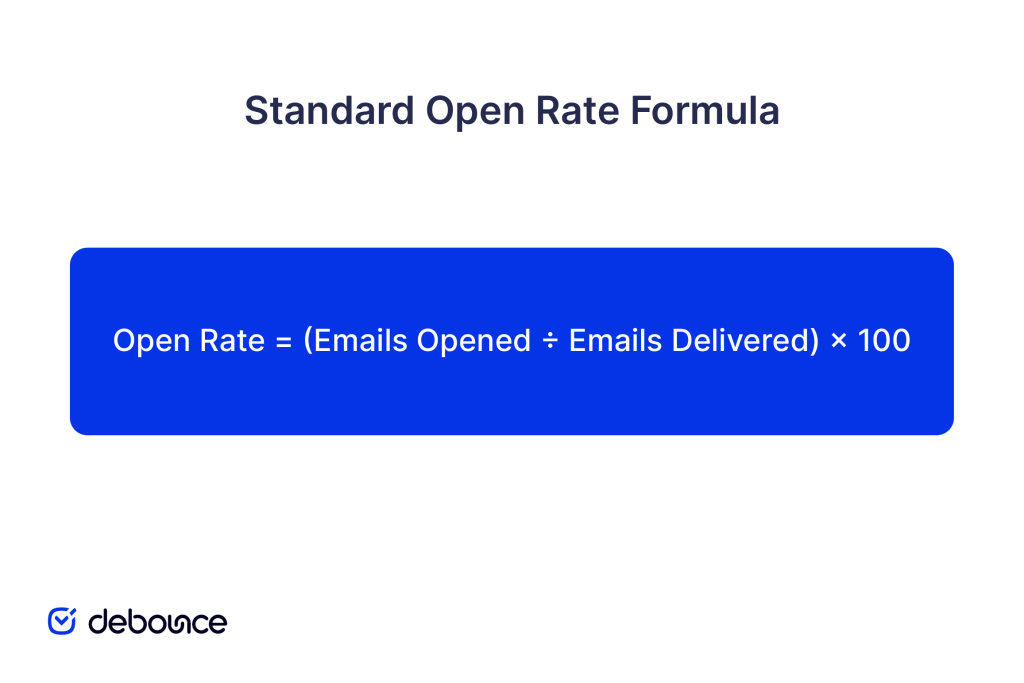
What each term means:
Example calculation:
You send a campaign to 10,000 subscribers:
Open Rate = (2,134 ÷ 9,700) × 100 = 22%
Important notes about open tracking:
Understanding email marketing analytics helps you interpret open rates alongside other metrics like click rates, conversion rates, and unsubscribe rates for a complete performance picture.
Declining open rates signal problems with deliverability, engagement, or campaign strategy. Understanding common causes helps you diagnose and address the issue.
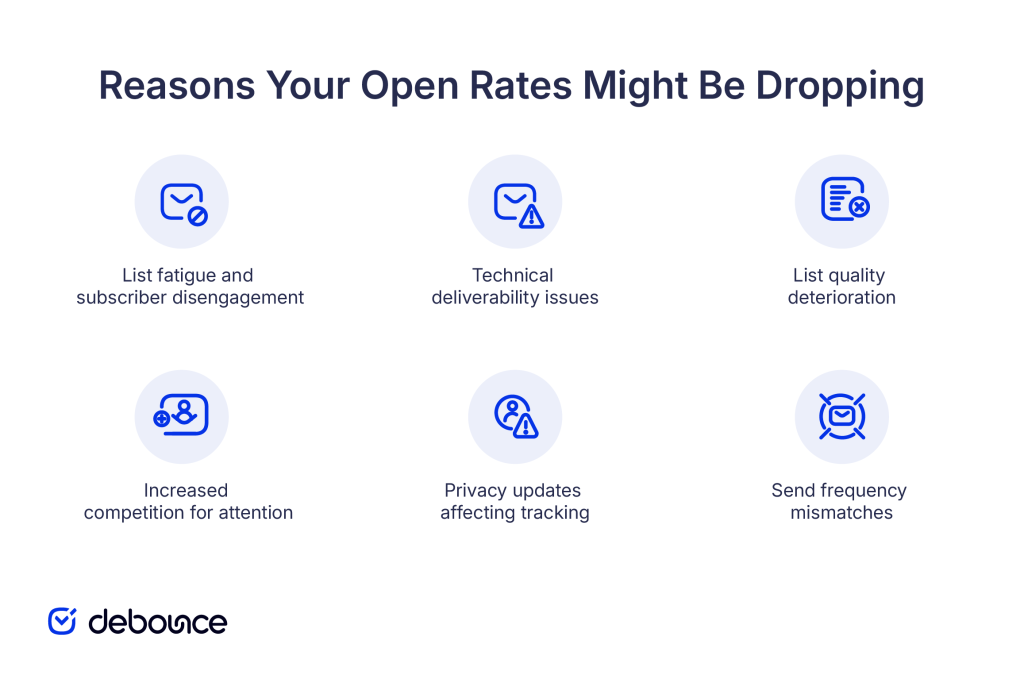
Subscribers who initially engaged with your content gradually lose interest over time if:
This natural decay is why regular list cleaning and re-engagement campaigns matter. Continuing to send to disengaged subscribers not only wastes resources but also hurts sender reputation when these inactive addresses never open.
Your emails might not be reaching primary inboxes due to:
These technical problems cause emails to land in spam folders or get blocked entirely, where they’re never seen, regardless of subject line quality.
Email addresses naturally decay over time as people:
If you’re not regularly cleaning your list and removing invalid addresses, your “delivered” count includes addresses that look successful but are actually abandoned inboxes that will never generate opens.
Recipients receive more emails than ever. As inbox volume increases and attention becomes scarcer:
This macro trend means maintaining historical open rates requires continuously improving subject lines and content value.
Apple Mail Privacy Protection and similar features artificially inflate open rates for some recipients while potentially masking real engagement declines. If your open rates suddenly jumped and then gradually fell, privacy-driven tracking changes might be creating misleading data.
Sending more frequently than your audience wants causes:
Sending too infrequently can also hurt, as subscribers forget they signed up or lose interest during long gaps between emails.
Improving open rates requires addressing both technical deliverability and strategic content decisions.
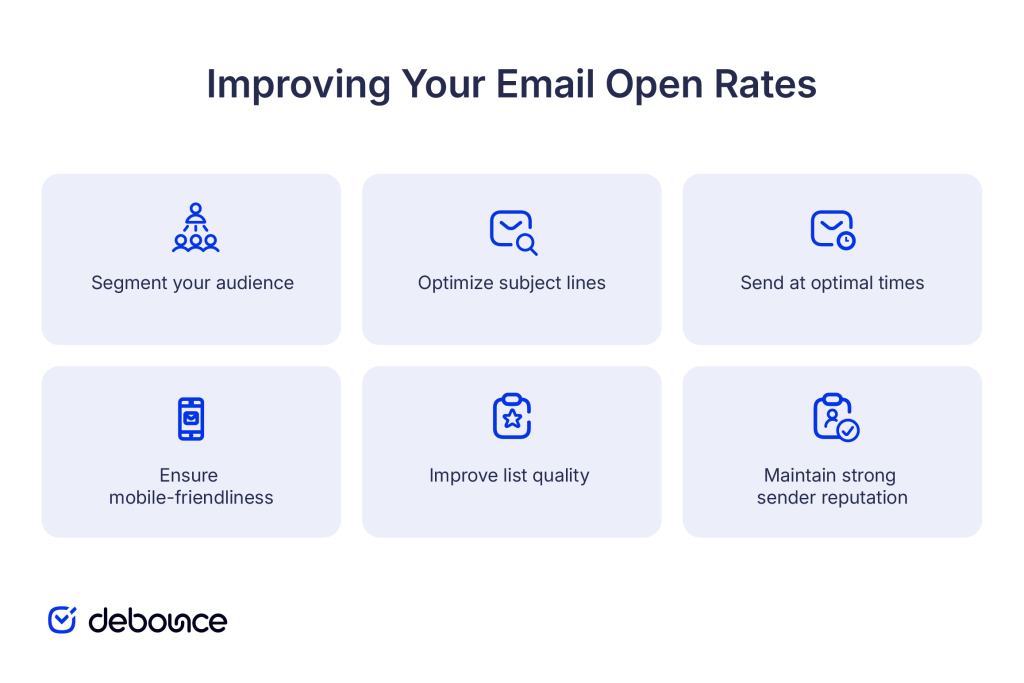
Stop sending every email to your entire list. Create segments based on:
Targeted emails to smaller, relevant segments consistently outperform generic blasts to entire lists because content matches recipient interests more closely.
Test different subject line approaches:
What works varies by audience. Run A/B tests on subject lines regularly to identify patterns that drive higher opens for your specific subscribers.
Generic “best time to send email” advice doesn’t work for everyone. Test different send times for your audience:
Track open rates by sending time and adjust your schedule based on actual performance data rather than industry averages.
A large share of email engagement now happens on mobile devices. When emails do not display properly on phones:
Test every email on mobile before sending to ensure subject lines, preview text, and content remain clear and readable on smaller screens.
Remove inactive subscribers, invalid addresses, and spam traps before they harm your sender reputation and reduce open rates. Regular list verification catches:
Continuing to send emails to contacts who never engage signals low relevance to mailbox providers. Over time, this reduces inbox placement for your entire list, including subscribers who do want to hear from you. Regular cleanup helps ensure your engagement metrics reflect real interest rather than inflated list size.
Follow email deliverability statistics and best practices:
Strong sender reputation ensures your emails reach inboxes where subject lines and content can drive opens. Learning how to increase email open rate and run better email campaigns requires continuous testing and optimization rather than one-time fixes.
A “good” email open rate isn’t a universal percentage. It’s one that’s improving relative to your baseline, competitive with others in your industry, and supported by strong list quality and sender reputation. Whether your open rate is 18% or 38%, what matters most is the trend: are you moving in the right direction based on the actions you’re taking?
Open rates signal whether your emails are reaching inboxes and resonating with recipients, but they don’t directly measure revenue, customer satisfaction, or business outcomes. Use open rates alongside click rates, conversion rates, and business KPIs to understand true campaign performance.
Review your last 10 email campaigns and calculate the average open rate. Compare that to your industry benchmark from this article. If you’re below average, identify the top three factors most likely hurting your opens (deliverability, subject lines, or list quality), then address one immediately. If you’re already performing well, test a new subject line approach or send time optimization to push performance even higher.
Keeping your email list clean makes a real difference to open rates, because you’re sending to actual people who are still active and able to engage. With DeBounce, you can verify addresses before they ever hit your list, keep an eye on list health over time, and remove risky contacts early, before they hurt your sender reputation and drag down open rates across all campaigns.
Is 35% a good email open rate?
Yes, 35% is an excellent email open rate that exceeds industry averages across most sectors; it indicates strong list quality, compelling subject lines, and good inbox placement.
How do I get a 90% open rate in my email campaign?
Consistently achieving 90% open rates is unrealistic for marketing emails; even transactional emails (order confirmations, password resets) typically max out at 70-80%, and privacy tracking limitations make numbers that high questionable. Instead, focus on sustainable 25-40% rates through list quality and relevance.
Which emailing techniques have the highest open rates?
Personalized subject lines, targeted segmentation to send relevant content to specific audience groups, sending at optimal times for your audience, and maintaining clean lists with only engaged, opted-in subscribers consistently produce the highest open rates.
How do I check my email open rate?
Check your email open rate in your email service provider’s (ESP) analytics dashboard, which automatically calculates the percentage of delivered emails that recipients opened and typically displays it alongside other campaign metrics like click rate and bounce rate.
What is a good click-through rate for email campaigns?
A good email click-through rate (CTR) typically ranges from 2-5%, with anything above 5% considered excellent; like open rates, good CTR varies by industry and audience, but it’s generally much lower than open rates since not everyone who opens will click.
Find quick answers to your questions about our pricing and plans.

There are certain best practices that every professional involved in email marketing knows. Things that most comprehensive guides detail, such as using email templates, setting...
Do you frequently open your mobile phone or laptop to check your emails? If you do, then you are not alone. Because studies show that...

Contacting inactive or invalid email addresses is a waste of your email marketing budget and can have other negative repercussions for your business’s email marketing....

Fake emails rely on urgency, impersonation, and visual tricks. Learning the signs lets you slow down and evaluate before acting. Sender domain mismatches,...

Many e-commerce marketers are very keen on investing in email marketing. They are growing their lists, sending engrossing email campaigns to engage visitors or, better...
Catch-all, also known as "accept-all" is a domain-wide setting mail server that is configured to accept all emails sent to the domain, no matter if...