Many e-commerce marketers are very keen on investing in email marketing. They are growing their lists, sending engrossing email campaigns to engage visitors or, better...

Key Takeaways
Email marketing software is a digital platform that enables businesses to design, send, automate, and track email campaigns at scale. It manages subscriber lists, personalises communication, measures performance, and integrates with CRM and ecommerce systems to turn email into a structured growth channel.
Businesses rely on email marketing software to drive revenue, deepen customer engagement, and automate lifecycle communication without increasing operational workload. In 2026, its role extends far beyond newsletters. It powers behavioural segmentation, predictive personalisation, AI-assisted content optimisation, real-time analytics, and cross-channel automation that connects email with SMS, apps, and web experiences.
The market is crowded with tools offering similar features, which makes choosing the right one more important. The best email marketing software should balance price, automation capabilities, strong deliverability, useful integrations, and room to grow. A smart choice helps email become a reliable source of revenue instead of a wasted expense.
The following email marketing software platforms were evaluated based on core capabilities, including feature depth, ease of use, pricing structure, automation functionality, integration options, and scalability. Particular attention was given to how well each tool supports growing databases, segmentation, analytics, and cross-channel workflows.
Each platform serves different business needs. Some are designed for small teams prioritising simplicity and affordability, while others cater to organisations that require advanced automation, enterprise-level reporting, or complex integrations.
HubSpot is a widely used choice for marketers who want an all-in-one platform that blends CRM, automation, and email marketing into a single ecosystem. Its email marketing capabilities let teams design professional campaigns with a drag-and-drop editor, personalise content with CRM-powered segmentation, and automate workflows tied to customer behaviour.
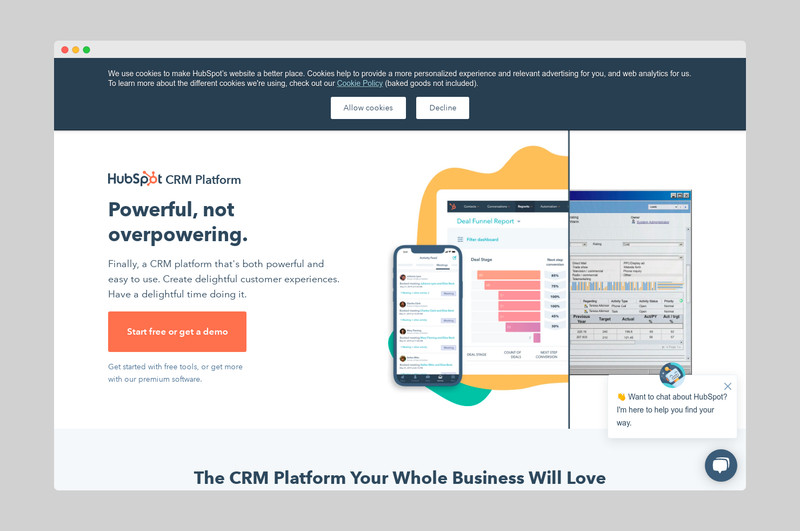
The platform includes a range of templates, layouts, and customisation options, and email performance data feeds into HubSpot’s analytics and reporting dashboards so marketers can measure engagement and optimise results.
Pricing for email marketing is included within HubSpot’s Marketing Hub plans. It offers a free tier with limited features, while paid plans typically start at around $20 per month (Starter) and scale into the hundreds or thousands per month for Professional and Enterprise tiers, depending on contact volume and advanced automation needs.
NotifyVisitors is one of the best email marketing software for Shopify stores and small to large businesses. It provides fast, easy, and cost-effective ways to engage your customers and increase your ROI.
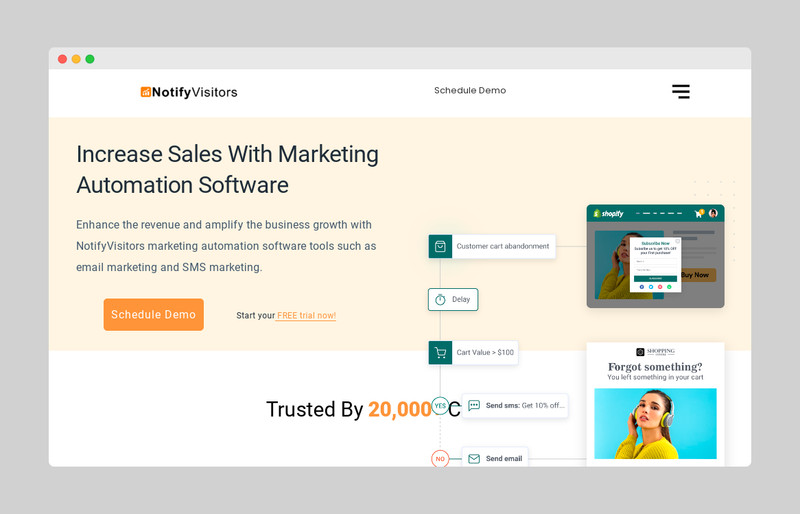
It features intuitive design tools that make it simple to create beautiful and engaging email campaigns from scratch. This powerful platform also offers comprehensive reports to optimize your email performance with valuable data analysis. NotifyVisitors is a powerful tool that can help any business effectively reach its intended audience and make the most out of its email marketing efforts.
Moosend is a familiar name in the marketing industry. It is an email automation tool that a business can use to curate a spectacular mailing list, create campaigns, and automate marketing tasks.
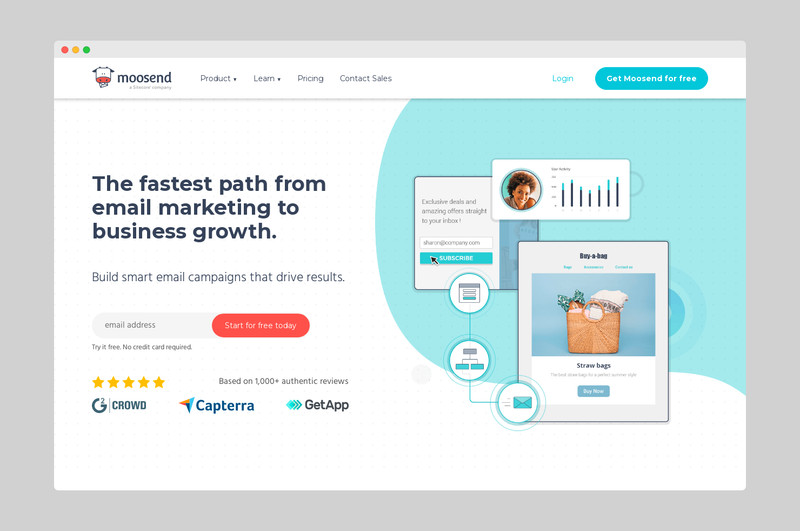
Moosend comes with a drag-and-drop builder that further eases down template creation and campaign management. Moreover, you can automate email sending, follow-through, and lead engagement. This automation basically waits for a rule-based trigger event, and when that happens, the emails are sent.
Moosend offers multiple features like a landing-page builder, forms inside emails, customer support. So when you sign up for the email marketing software, you get tons of other benefits too. The software is available for free with some basic features, but you can unlock the true potential of this marketing software by paying $7 per month. The charges go up as your list builds up more, so for more extensive lists, the pricing is quite variable.
ActiveCampaign is a machine learning tool for email marketing. With its intellect, ActiveCampaign can help you in creating impactful and revenue-generating email marketing campaigns.
It comes with predictive actions and leads scoring that helps marketers understand their leads in a better way. Moreover, the lead scoring segment ranks leads with the highest to lowest, so marketers can focus more on the top leads and do something different to revive leads that stay at the bottom of this list.
ActiveCampaign has quickly made it to the mainstream because of its 1000+ integrations with CRMs, websites, and other tools. ActiveCampaign has multiple plans to ensure a more extensive client base, and the plans start from $15/month that can go up to enterprise plans of $145/month based on the feature list.
Omnisend is a marketing tool that has helped multiple large-scale eCommerce businesses to connect with their clients. It is an email marketing tool with numerous features that can connect SMS marketing, Google Ads, Instagram, Facebook Ads, and even push notifications. Omnisend is a multi-channel marketing tool with fantastic designs and ready-made templates.
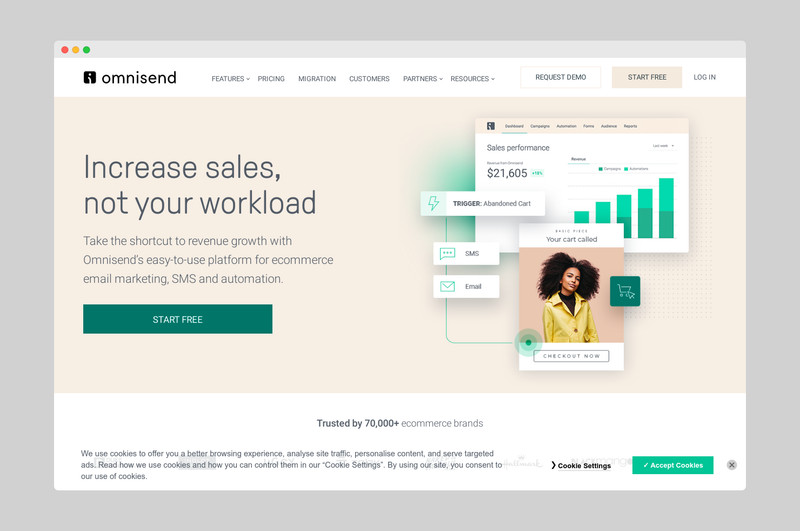
Using Omnisend, you can drive impactful marketing campaigns, and you can provide dynamic discount codes to your clients using the email marketing features. The survey and polling feature of Omnisend is designed to help businesses understand their clients better and also provides analytics for campaigns.
Omnisend’s pricing model starts from $16/month and goes up to $400/month or higher, and the features and bandwidth also changes.
GetResponse is an automated email marketing tool that can help businesses to run campaigns and grow revenue.
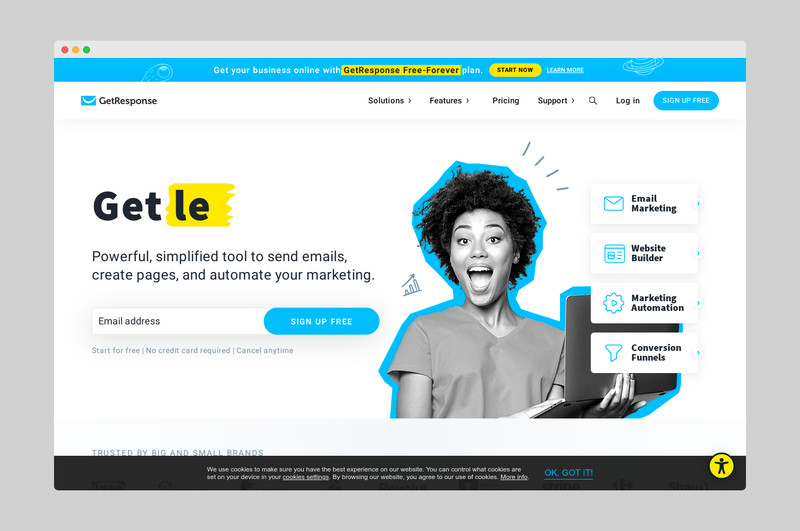
GetResponse is different than the other marketing software on this list, and it comes with a wide variety of features. It has a landing page builder and advanced audience segmentation engine that helps businesses to break down their audience and target them more effectively. GetResponse is not just an email marketing software, it also extends into the funnels segment.
Using this tool, you can generate funnels for everything ranging from webinars to sales and leads. You create all these funnels fully automated because of GetResponse’s remarkable technology.
GetResponse software packages start from $15/month and go up to hundreds per month, depending on the list size.. But the company also offers enterprise tiers to match the high demand of more prominent companies.
If you are a blogger or a social media influencer, Kit will be really helpful to your company. This marketing platform is focused on creating new leads using custom email templates and other tactics.
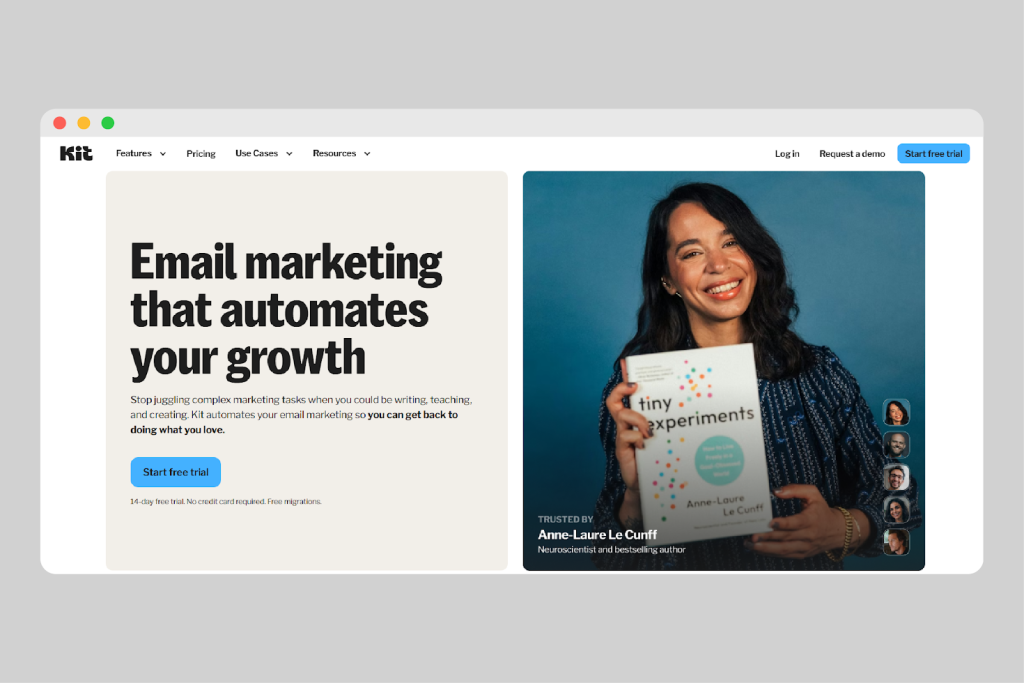
It includes built-in audience tagging and segmentation, subscriber scoring, and creator-focused reporting that tracks subscriber growth, engagement, and conversion performance.
To ease down the work of influencers, the marketing platform offers email automation services that are rule-based. These automated emails are dispatched once an event is triggered. Moreover, setting up the automation emails is really easy combined with the visual workflow editor.
Kit is aimed at individuals who want to develop and market their own brand. It is a good fit for people like influencers, educators, creators, and bloggers. The software lags many features if you plan to use it for commercial purposes. Aimed at a smaller audience, Kit weighs on the heavier side of the price scale, with the plans ranging from $29/month to $66/month.
The platform formerly known as Autopilot is now Ortto, a unified customer data and marketing automation solution that helps teams design and automate email campaigns alongside multi-channel journeys. It offers a visual journey builder, behavioural audience segmentation, drag-and-drop email creation, automated triggers, SMS and push support, A/B testing, and analytics dashboards to track engagement and performance.
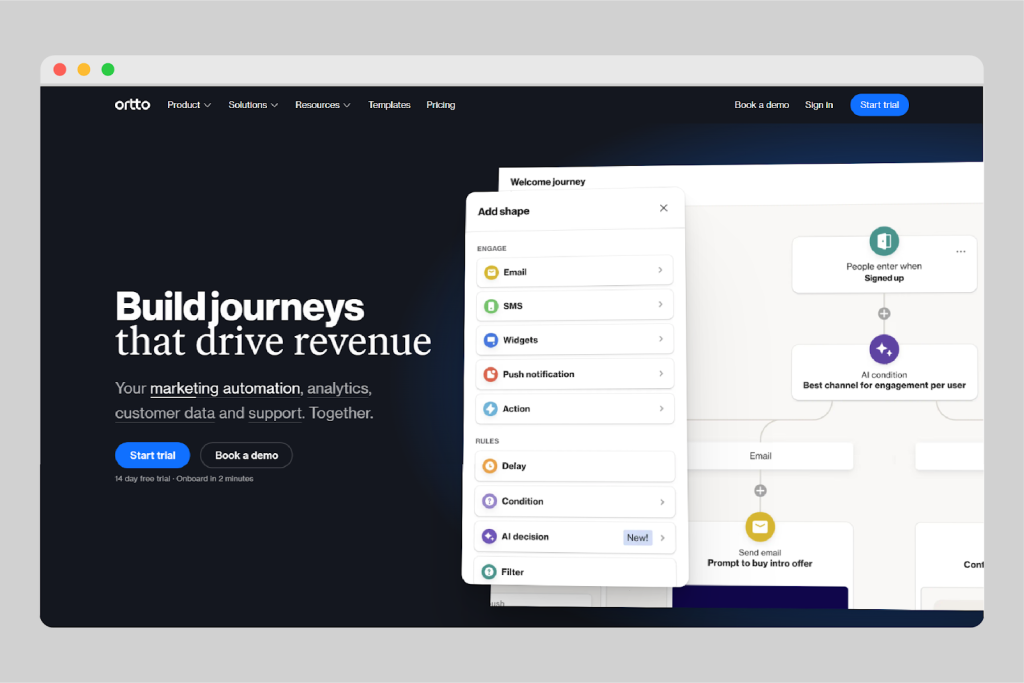
Ortto’s workflow builder lets marketers set up automated journeys tied to user actions, making it easier to nurture leads and engage customers at scale with personalized messaging. Collaboration tools and integrations with CRMs and ecommerce platforms help teams coordinate campaigns and use unified customer data to refine targeting.
In terms of cost, Ortto’s Starter plan begins at about $169/month when paid annually for up to 5,000 contacts, with higher tiers available for larger lists and expanded features.
MailChimp is another industry leader, just like Hubspot. This software is often used to create eye-catching customized emails for your audience. Anyone who has used email marketing software knows the hurdles that come with them, and Mailchimp solves many of them.
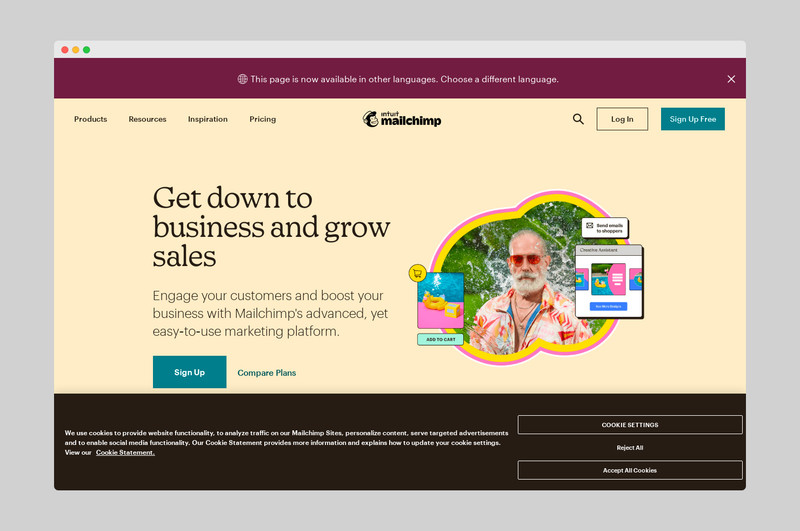
MailChimp has one of the best drag-and-drop email builders on this list, and it also features intelligent contact list segmentation. With Mailchimp, you can create, organize, send and track a lot of marketing campaigns at once, and this is one of the best features a large organization can ask for.
Mailchimp offers tiered pricing based on features and contact volume. Paid plans typically start at around $13 per month and can exceed $350 per month as your list size and automation needs increase.
Drip is an email marketing and automation platform built specifically for e-commerce brands. It focuses on helping smaller and mid-sized online stores increase revenue through behaviour-based campaigns and customer lifecycle marketing. Key features include advanced segmentation, visual workflow automation, abandoned cart recovery, product recommendation emails, revenue attribution reporting, prebuilt ecommerce automation templates, and deep integrations with Shopify, WooCommerce, and BigCommerce.
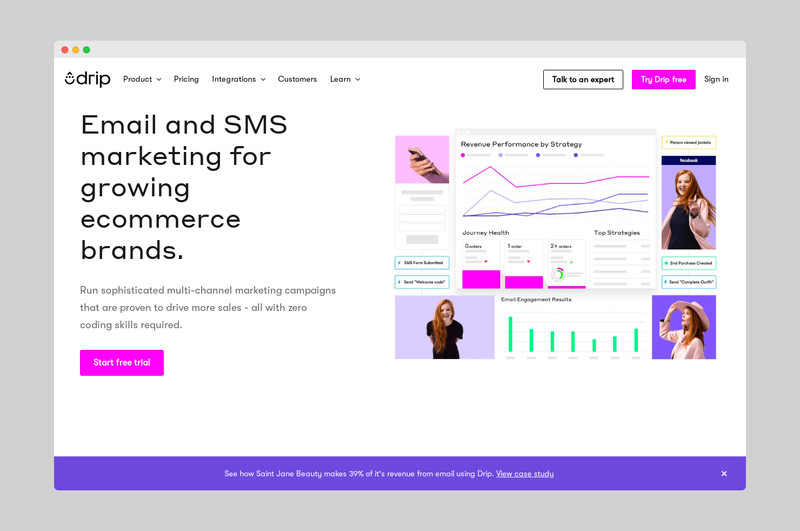
Drip also supports SMS marketing, multi-channel automation, dynamic content personalisation, A/B testing, and real-time customer data tracking, allowing store owners to trigger messages based on browsing behaviour, purchase history, or engagement patterns. The platform is designed to connect marketing activity directly to sales performance.
Drip typically begins at around $39 per month for up to 2,500 contacts, with costs increasing as your subscriber list grows. Pricing scales based on contact volume rather than feature tiers.
Brevo is an all-in-one email marketing software and customer engagement platform (formerly known as Sendinblue) that combines email, SMS, automation, and CRM tools into a single solution. It’s designed primarily for small and medium-sized businesses, startups, and ecommerce teams that need a flexible tool to manage campaigns, automate workflows, and engage customers across multiple channels.
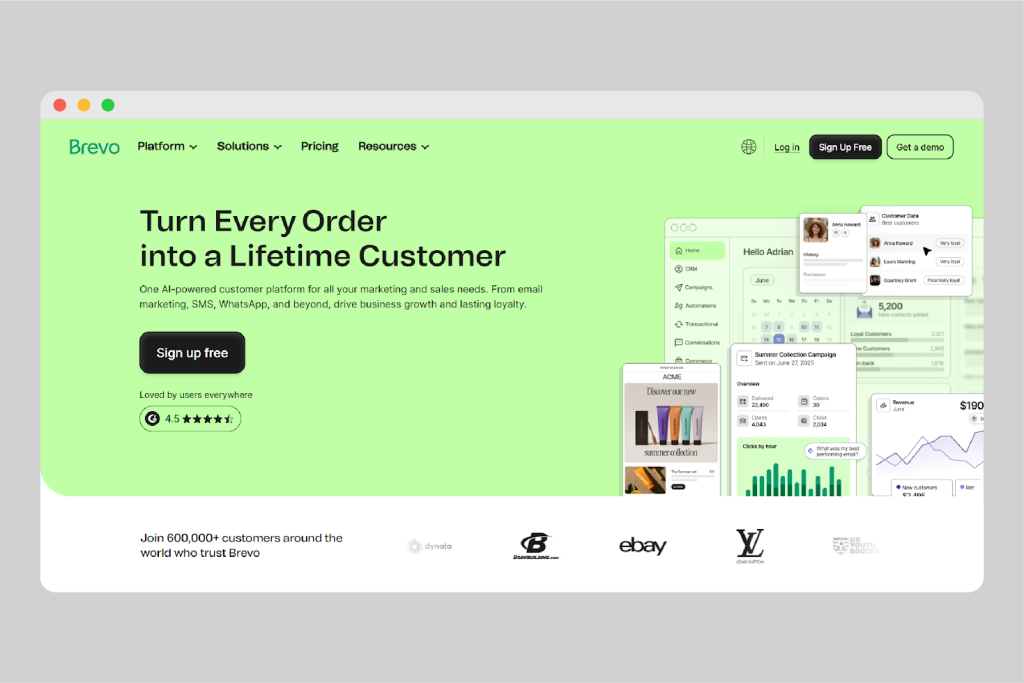
Core features include:
Brevo’s pricing structure is based on email volume and feature access, and it offers a free plan that allows up to 300 emails per day with unlimited contacts. Paid plans typically start at around $9 per month for entry-level use and scale upward for higher send limits, automation, landing pages, and advanced support.
Selecting the right email marketing software requires more than comparing feature lists. The tool you choose should support your growth strategy, align with your technical setup, and fit your budget without limiting future expansion. Evaluating the following factors will help you make a decision based on performance and long-term value rather than surface-level features.
Deliverability determines whether your emails reach inboxes or end up in spam folders. Look for platforms that provide transparent metrics on delivery rates, bounce rates, spam complaints, and inbox placement performance. Strong infrastructure, authentication support, and reputation-monitoring tools are essential for consistent campaign results.
Reusable templates save time and ensure brand consistency across campaigns. A strong platform should offer responsive, customisable templates and a drag-and-drop builder that allows easy updates without coding. The ability to store and reuse content blocks, headers, and design elements improves efficiency as your email volume increases.
Email marketing decisions should be data-driven. Choose software that provides detailed analytics, including open rates, click-through rates, conversion tracking, and revenue attribution where applicable. Advanced tools also offer behavioural insights, segmentation performance data, and automated reporting that helps refine future campaigns.
Pricing structures vary significantly across providers. Some charge based on contact volume, others on email sends, and some on feature tiers. The right platform should scale predictably as your list grows, allowing you to expand automation and segmentation capabilities without disproportionate cost increases.
Email marketing rarely operates in isolation. Your software should integrate smoothly with CRM systems, e-commerce platforms, payment processors, analytics tools, and customer support platforms. Strong integrations ensure data flows automatically between systems, reducing manual work and enabling more personalised communication.
Different tools are built for different stages of growth. Small businesses and solopreneurs may benefit from simple interfaces and entry-level automation, while larger organisations require advanced segmentation, team permissions, and multi-channel capabilities. Matching the platform to your business size prevents overpaying for unused features or outgrowing the system too quickly.
Email marketing performance is heavily influenced by the quality of your infrastructure. Even the most advanced email marketing software cannot compensate for poor list hygiene or low-quality data. To maximise ROI, businesses must prioritise validation and protection before a single campaign is sent.
Before importing contacts into your chosen ESP, it is essential to use a specialised email verification tool to validate your list. Bulk list validation checks for invalid addresses, disposable emails, syntax errors, role-based accounts, and high-risk domains. This step protects your sender reputation from the beginning and ensures that your new software account starts with clean data rather than immediate deliverability issues.
Removing spam traps and deactivated accounts is particularly critical. Spam traps are email addresses used by mailbox providers and anti-spam organisations to identify careless senders. If your campaign hits these addresses, your domain or IP can quickly be flagged as suspicious, which damages deliverability across all future campaigns. Deactivated or dormant accounts also increase bounce rates, signalling poor list management and further weakening inbox placement.
Using tools such as DeBounce helps prevent these risks before they affect your ESP reputation. DeBounce provides list cleaning, spam trap detection, disposable email filtering, and SMTP validation to identify risky contacts before they are uploaded. Its widgets and APIs allow businesses to validate emails in real time at the point of capture, ensuring that only valid, high-quality leads enter the marketing funnel. This prevents problems from accumulating and protects long-term sender credibility.
Cleaning your list with DeBounce also has a direct financial benefit. Most ESPs charge based on contact volume, which means invalid or inactive subscribers increase your monthly cost without generating revenue. Removing “dead” addresses reduces unnecessary spend, improves engagement metrics, and ensures you are paying only for contacts that can realistically convert. Cleaner data leads to stronger deliverability, higher engagement rates, and more efficient use of your email marketing investment.
Many established businesses continue to rely on email as a consistent revenue and retention channel. Its effectiveness, however, depends largely on the quality of the email marketing software you choose and how well it supports automation, segmentation, analytics, integrations, and scalable growth.
Selecting the right email marketing software requires aligning features with your business goals, matching automation depth to your marketing strategy, ensuring the pricing model fits your budget, and confirming that the platform integrates smoothly with your existing infrastructure.
Your results will also depend on the quality of the data you feed into your platform. Even the best ESP cannot protect ROI if your contact list contains invalid or risky addresses. Before importing subscribers, use DeBounce to validate and clean your lists, remove spam traps and inactive accounts, and ensure only high-quality leads enter your funnel.
By combining the right email marketing software with strong list hygiene through DeBounce, you protect deliverability, reduce unnecessary ESP costs, and maximise the return on every campaign you send.
The four main types are promotional emails (offers and sales), transactional emails (order confirmations and receipts), automated lifecycle emails (welcome and abandoned cart sequences), and newsletters (updates and educational content).
Using unverified lists, sending generic messages without segmentation, ignoring analytics, and failing to maintain proper authentication records are among the most common and costly mistakes.
In 2026, email marketing is driven by predictive segmentation, real-time personalisation, cross-channel automation, stronger privacy compliance, and improved deliverability monitoring.

Find quick answers to your questions about our pricing and plans.
Many e-commerce marketers are very keen on investing in email marketing. They are growing their lists, sending engrossing email campaigns to engage visitors or, better...
There are two types of emails you can send to your customers: transactional emails and marketing emails. If you want to get the most out...

Email tracking helps marketers understand how recipients interact with campaigns, but its accuracy depends on how data is collected and interpreted. Email tracking...

Email marketing mistakes can eat a lot of your email marketing budget. Avoiding this deadly email marketing mistakes is important not only for lowering the...
If you’re feeling somewhat uncomfortable when writing follow-up emails, you’re not alone. Many marketers don’t know how to approach follow-up emails for an obvious reason:...

Email sender reputation determines whether your messages reach the inbox, the spam folder, or get blocked entirely. Email reputation is influenced by spam...